PCOS and Thyroid: Symptoms, Connection, and What Helps

PCOS and thyroid conditions share something frustrating in common: both are extremely common in women, both cause a cluster of symptoms that overlap with each other and with a dozen other things, and both are routinely dismissed or misdiagnosed for years before someone runs the right tests. PCOS affects roughly 10 to 15 percent of women of reproductive age. Hypothyroidism affects between 5 and 10 percent of women. Women with PCOS have a significantly higher risk of thyroid autoimmunity than women without PCOS. These two conditions interact.
Understanding PCOS
PCOS stands for polycystic ovary syndrome. Despite the name, you do not need to have visible cysts on your ovaries to have PCOS. The diagnosis is based on the Rotterdam criteria: having at least two of three features, which are irregular or absent ovulation, elevated androgen levels (either through symptoms or blood tests), and polycystic-appearing ovaries on ultrasound.
What drives PCOS in most cases is insulin resistance. The ovaries are sensitive to insulin, and when insulin levels are chronically elevated, they respond by producing excess androgens. This disrupts ovulation, causes the follicle cysts, and drives many of the visible symptoms.
Common PCOS Symptoms
Irregular periods are the most common presenting complaint, ranging from cycles longer than 35 days to complete absence. Adult acne particularly along the jawline, excess facial or body hair (hirsutism), difficulty losing weight, scalp hair thinning, and skin darkening in folds of the neck or armpits (acanthosis nigricans, a sign of insulin resistance) are all associated with PCOS. Not every woman with PCOS has all of these symptoms. PCOS presents differently in different people, which is part of why it takes an average of two years to get a diagnosis.
Understanding Thyroid Conditions
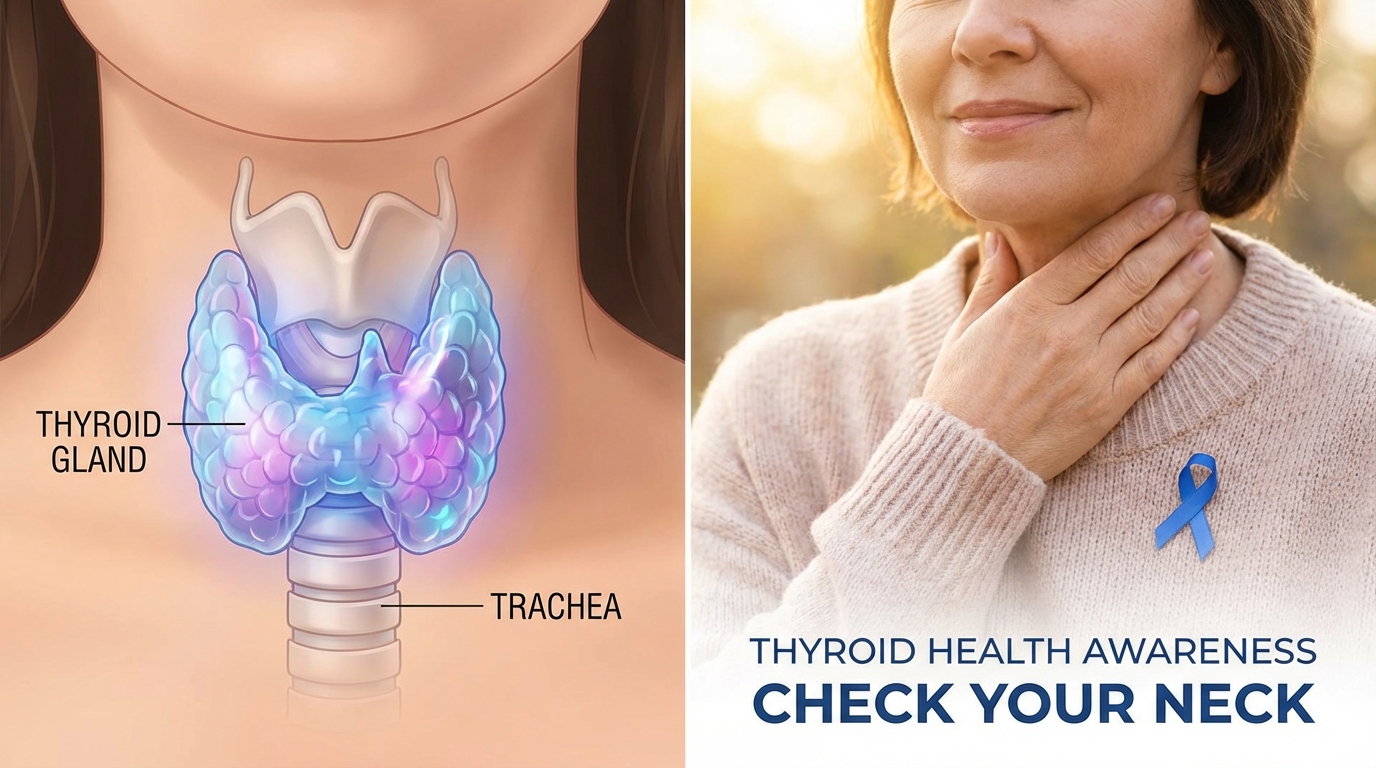
The thyroid gland produces T3 and T4 hormones that regulate metabolism, body temperature, heart rate, mood, and reproductive function. Hashimoto's thyroiditis is the most common cause of hypothyroidism in developed countries. It is an autoimmune condition where the immune system attacks thyroid tissue. A 2019 Danish study found that women with PCOS have 2.5 times the risk of thyroid disease compared to women without PCOS, making screening for both conditions together important.
Thyroid Symptoms That Often Go Unrecognized
Fatigue is the most common symptom of hypothyroidism but also one of the most commonly dismissed. Weight gain despite no change in diet or exercise, cold intolerance, constipation, dry skin, hair thinning and loss, brain fog, depression, and irregular or heavy periods are all associated with an underactive thyroid. A 2024 Hormone Health Network survey found that nearly 45 percent of women with thyroid dysfunction waited more than a year for an accurate diagnosis, most often because symptoms were attributed to stress or normal aging.
Getting Diagnosed Properly
For PCOS: blood tests for LH, FSH, total and free testosterone, DHEA-S, fasting insulin, and fasting glucose are the standard starting panel. A pelvic ultrasound looks at ovarian morphology.
For thyroid: a basic TSH test is the standard first step but does not give the complete picture. A full thyroid panel including Free T3, Free T4, and thyroid antibodies (Anti-TPO and Anti-Tg) is necessary to identify Hashimoto's specifically, since TSH can be normal in the early stages while antibodies are already elevated. Many people with early Hashimoto's are told their thyroid is fine based on TSH alone.
What Actually Helps: PCOS Management
Because insulin resistance drives most PCOS cases, interventions that improve insulin sensitivity are most effective. A low glycemic index diet that stabilizes blood sugar reduces insulin spikes and has shown measurable improvement in androgen levels and menstrual regularity. The Mediterranean diet pattern has particularly good evidence for PCOS.
Both aerobic exercise and resistance training improve insulin sensitivity. Resistance training is particularly effective because it increases glucose uptake into muscle independently of insulin. Three to four sessions per week produce meaningful improvements in metabolic markers within 12 weeks in most studies.
Inositol, specifically myo-inositol combined with D-chiro-inositol in a 40:1 ratio, has the most evidence of any non-prescription supplement for PCOS. It improves insulin sensitivity, reduces androgen levels, and in some studies improves ovulation rates.
What Actually Helps: Thyroid Management
Clinical hypothyroidism is treated with levothyroxine, a synthetic T4 hormone. For Hashimoto's specifically, a gluten-free diet has reasonable evidence in the subset of patients who also have celiac disease or non-celiac gluten sensitivity. Selenium supplementation at 200 micrograms per day has been shown in several studies to reduce thyroid antibody levels. Stress management matters because cortisol directly suppresses thyroid function.